
Vehicles parked on pavements


An ongoing issue for motorists is the need to have two tyres on the pavement to avoid unduly restricting road space for wider vehicles and emergency services in narrow streets.

Unfortunately, this can have knock on effects for parents with buggies or disabled vehicles that need to use these pavement areas.

To address these issues the Government has launched a consultation. In their recent press release on this issue the Department for Transport said:

Pavements could be made safer for people with disabilities, and families, under new proposals to ban antisocial parking unveiled by the government today (31 August 2020).

Parking on pavements disproportionately affects people with visual or mobility impairments, those assisted by guide dogs, and wheelchair and mobility scooter users. More than 95% of wheelchair users and people with visual impairments say they had problems with vehicles parked on pavements.

Three options are proposed in the consultation launched today – improving the traffic regulation order process to make it easier for councils to prohibit pavement parking in their areas, giving councils powers to fine drivers who park on paths, and a London-style nationwide ban on pavement parking.

However, there is still a major role for cars and other private vehicles, so any future plans will need to take this into consideration.


Travel to EU after 1 January 2021


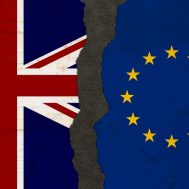
A reminder, if one was needed, is that we seem to be heading for a no-deal Brexit from 1 January 2021. One of the issues we will all have to confront is the raft of regulation that we will need to observe from this date if travelling to the EU and certain affiliated territories.

The latest advice on the GOV.UK website says:

Travel to the EU, Switzerland, Norway, Iceland or Liechtenstein will change from 1 January 2021. Things you may need to do before you go include:

  • checking your passport has enough validity on it
  • get travel insurance that covers your healthcare
  • checking you have the right driving documents
  • organising pet travel – contact your vet at least 4 months before you go

There are more things to do if you are travelling for business. For example, going to meetings and conferences, providing services (even with a charity), and touring art or music. Additionally, on the day you travel, you will need your passport to both:

  • have at least 6 months left
  • be less than 10 years old (even if it has 6 months or more left)

If you do not renew your passport, you may not be able to travel.

It is particularly important you get travel insurance with the right cover if you have a pre-existing medical condition. 


Problems booking a driving test?


The driving test online booking service reopened on Friday 21 August and then crashed due to the unexpected demand for places. By 8pm that evening the site had been visited seven million times.

In a recent announcement the Drivers and Vehicles Standards Agency (DVSA) said:

Coronavirus has severely impacted our business as usual operations, including by stopping driving tests in March. Since then DVSA have only been dealing with applications for emergency driving tests for critical workers.

Following unprecedented demand for the driving test booking system with almost 7 million attempts to book a test when it opened, we need to carry out urgent maintenance so people can book tests.
We have to close the booking service.

Accordingly, until 8am on Wednesday 26 August 2020, the booking site will remain off-line. This essential maintenance should enable DVSA to cope with the increased demand from the public.

The services that will be unavailable during this period are:

  • booking your driving test
  • changing your driving test appointment
  • checking your driving test appointment details
  • cancelling your driving test

It is also worth underlining that the DVSA is only taking bookings for a six week period. On which basis it is unlikely that demand will reduce. Let’s hope that DVSA improvements in their online systems are effective.


Did you benefit from the Eat Out campaign?


The Eat Out to Help Out scheme to encourage the struggling restaurant sector was announced as part of the Chancellor’s Summer Economic announcements. The scheme was designed to help restaurants recover from the effects of the lockdown and has been a great success. 

The scheme was launched on 3 August 2020 and was available every Monday, Tuesday and Wednesday. The last day you can benefit from the scheme is 31 August 2020. In the first two weeks of the scheme over 35 million meals were enjoyed across the country with over 85,000 restaurants taking part. 

Meals that were eaten in at any participating restaurant on the designated days were discounted by 50% up to a maximum discount of £10 per head including children. The discount also applied to non-alcoholic drinks but could not be claimed on alcoholic drinks or service charges. 

One restaurateur commented that:

'The response to Eat Out to Help Out has been phenomenal. Even though venues are operating at reduced capacity and with smaller teams following more thorough safety measures, we’re still managing to serve a similar number of customers on Mondays – Wednesdays that we were this time last year. That makes a huge difference to independents like us.'

The scheme aimed to help protect the jobs of the hospitality industry’s 1.8 million employees by encouraging people to safely return to their local restaurants, cafes and pubs where social-distancing rules allow. Around 80% of hospitality firms stopped trading in April, with 1.4 million workers furloughed, the highest of any sector.

It will be interesting to see if any further measures are announced to help this sector once the scheme closes. 


Support clients with grant aid 


At the end of July, the government announced £20m of new grant funding was to be allocated to Growth Hubs, specifically to help smaller businesses that have been negatively impacted by the COVID-19 pandemic to access much needed professional support.

These grants will provide businesses between £1,000 and £5,000 to help them access or adapt new technology and other equipment as well as to pay for professional, legal, financial or other advice to help them get back on track. The grants could be used, for example, to cover certain support services provided by accountants.  

The exact amount of the grants will be decided at a local level but are expected to typically be up to £3,000. Under certain circumstances the maximum grant of £5,000 may be awarded. 

The support will be delivered from the England European Regional Development Fund. The funding has been allocated to Growth Hubs within each Local Enterprise Partnership and the scheme is expected to open shortly. It should be noted that this funding is extremely limited and available on a first come, first served basis. There will be no obligation for businesses to contribute financially as the grant will be fully funded by the government. 

To establish a viable grant programme, the government has set a minimum of £250,000 for all Local Enterprise Partnership areas. The allocation of resources will be reviewed as the grant funding is delivered. The funding is being provided to address immediate needs and all grants must be awarded by 28 February 2021 and all activity fully completed by 31 March 2021.


COVID measures – tougher fines announced


The Home Office has announced tougher measures targeting the most serious breaches of social distancing restrictions.

In most cases they will come into effect on Friday 28 August 2020 ahead of the bank holiday weekend.

In their announcement issued 23 August, the Home Office said:

Those facilitating or organising illegal raves, unlicensed music events, or any other unlawful gathering of 30 people or more may face a £10,000 fine – placing a new deterrent on the breaches that put the public most at risk.

Fines of £100 can continue to be issued to those who participate in illegal gatherings and those who have already received a fine will see the amount of doubled on each offence, up to a maximum of £3,200.

But the measures extend beyond large gatherings. There are also to be increases in fines for not wearing face masks when mandated to do so.

Also, on the 28 August, fines for not wearing face coverings where it is mandated will also double for repeat offences, starting at £100 and doubling to a maximum of £3,200 for each repeat offence, mirroring fixed penalty notices for breaches for other restrictions.

It is mandatory to wear a face covering on public transport, and in many enclosed public spaces including shops, supermarkets and high street outlets unless you are exempt, including on the grounds of age, health or disability.


Banks stand up to be counted


The fifth publication has been released ranking the service quality league table of personal and business current account providers. 

For personal and small business customers, the survey is designed to show clearly how the quality of services compares across different dimensions, such as service quality, online and mobile offerings, overdrafts, in-branch experience and, for small business customers, the quality of their relationship or account management services. The CMA requires banks and buildings societies to display the survey results prominently online and in-branch so that customers can see whether they can get a better deal elsewhere.

The top three places for overall service quality providing personal accounts are:

  1. Monzo
  2. Starling Bank, and
  3. First Direct

Customers with personal current accounts were asked how likely they would be to recommend their provider, their provider’s online and mobile banking services, services in branches and overdraft services to friends and family. The results show the proportion of customers, among those who took part in the survey, of each provider who said they were extremely likely or very likely to recommend each service.

It is interesting that these smaller banks are ahead of the big four banks and other larger institutions in the UK.


Applications open for second round of self-employed scheme


The second round of the Self-employment Income Support Scheme (SEISS) opened for applications on Monday 17th August. The second and final grant covers the quarter to 31 August 2020. The second grant will provide up to £6,570 for the quarter (£2,190 per month) paid in a single instalment. These figures are based on 70% of eligible earnings (previous quarter 80%). Claims for the first grant have now been closed.

The following are some of the most important eligibility criteria for the scheme:

  • The applicant must have been adversely affected by coronavirus on or after 14 July 2020.
  • Applicants must be self-employed or a member of a trading partnership, voluntary work, or duties as an armed forces reservist.
  • Have filed a tax return for 2018-19.
  • Have traded in 2019-20; be currently trading at the point of application (or would be except for COVID-19) and intend to continue to trade in the tax year 2020-21,
  • Have trading profits of less than £50,000 and more than half of total income from self-employment.
  • Individuals can continue to work, start a new trade or take on other employment including voluntary work, or duties as an armed forces reservist.

It is possible for a qualifying self-employed person to qualify and claim for the second grant even if they had not claimed / qualified for the first grant.

If you are eligible, you should have been contacted by HMRC via letter, text or email and given a date on which to make your claim. Those who are eligible to use the scheme will have been given a randomly allocated date when they can apply for their grant. Whilst you cannot apply before the allocated day, there is no issue submitting a claim after that day. The application process will close on 19 October 2020. Claims are expected to be paid within six working days of submission of a claim.

Over 2.7 million benefited from the first stage of the SEISS – with the government handing out £7.8 billion of grants to help them through the crisis.

More than 3 million people are thought to be eligible for the second grant although some self-employed workers have fallen through the cracks such as the newly self-employed and some freelance workers who have been unable to claim. There are concerns for many self-employed workers when the scheme comes to an end, especially if we see a second wave of the pandemic.


Greening of Scotch Whisky


Needless to say, the greening does not refer to the colour of whisky.

The Green agenda has received endorsement from Scotland’s world famous distilleries who are aiming to cut their emissions by almost half a million tons of CO2 every year.

The achievement has been facilitated by the new Green Distilling Fund announced in the March 2020 budget.

Greening distillery operations in Scotland and across the rest of the UK will help contribute towards its legally-binding target of reaching net-zero emissions by 2050. The funding comes as the UK government continues to ramp up its green economic recovery from Coronavirus ahead of hosting the UN Climate Change talks (COP26) in November next year.

All businesses and home owners should be alert to funding that is likely to become available as the imperative to tackle climate change kicks-in over the coming years.

For example, from September, a New Green Homes Grant will provide vouchers worth up to £5,000 towards the cost of energy efficient improvements for homeowners in England. 


Lockdown – be ready for the unexpected


One of the more insidious effects of the coronavirus outbreak is its unpredictability.

Businesses need to plan. To achieve this there needs to be an underlying, stable economic platform. Lockdown – whether locally or nationally applied – removes the certainty required to achieve planned results.

For example, the recent attempts to relax distancing rules and allow hospitality businesses (pubs, restaurants, hotel etc) to reopen on a restricted basis has back-fired in certain areas and the government has created a further layer of uncertainty – regional or local lockdown.

It is self-evident why lockdown is required – to control infection – but the effects on small businesses can be catastrophic.

From green to red the issues that need to be considered might include:

  • If you are fortunate and can trade online, lockdown may actually increase your turnover. However, can you meet changes in demand?
  • By taking advantage of available grants and government backed soft loans you may have managed to keep your business hopes alive, but the evidence is that the job related, furlough grants are now being phased out and there is just so long that you can trade at a loss without becoming insolvent.
  • Lockdown has meant that you are or were effectively closed to business. If the present easing creates more infection further restrictions may be required; either locally or nationally. This may require that business owners face up to unpalatable choices.

Accordingly, we all need to plan for the unexpected, and in particular, that our business plans are flexible enough to cope with new restrictions especially if applied to our local area. 

If you need help with this planning and review process please get in touch with us.