Increase in savings guarantee for bank deposits


The Financial Services Compensation Scheme (FSCS) has raised its savings guarantee for bank deposits, increasing the deposit protection limit from £85,000 to £120,000 per person. This change came into effect on 1 December 2025 and marks a significant increase in how your bank deposits are protected in the UK.

This new deposit protection limit ensures that qualifying UK bank and building society depositors are covered if their bank fails. The FSCS compensation limit is reviewed periodically by the Prudential Regulation Authority (PRA). Following a consultation in March 2025, the PRA confirmed the increase in November 2025. Prior to this, the £85,000 limit had been in place since January 2017.

The FSCS protection applies per person, per bank or building society, which means joint account holders are eligible for double the protection, or up to £240,000 in total. In addition, savers with certain types of temporary high balances such as proceeds from a house sale, insurance payouts or inheritances can also benefit from increased protection. This limit has increased from £1 million to £1.4 million per depositor per life event. This additional coverage is available for up to six months.

For most savers, the new £120,000 limit will provide adequate protection. However, those with deposits exceeding this amount should consider spreading their savings across multiple banks or building societies to ensure all their funds are covered. It is important to note that if you hold multiple accounts within a single banking group (i.e., banks that share the same banking licence), the £120,000 limit applies to the total amount across all accounts within that banking group, not to each individual account.

You do not need to take any action to benefit from the increased protection. If your bank or building society were to fail, the FSCS would automatically compensate you up to the new limits.

Source:Other | 01-12-2025


The likely direction of interest rates in 2026


As we look ahead to 2026, there is growing speculation about how the Bank of England will manage interest rates during what many economists believe will be a period of calmer inflation, steadier wage growth and a more predictable economic backdrop. After several years shaped by sharp price rises, supply chain shocks and policy responses that required rapid increases to the Bank Rate, the outlook for the coming year appears more settled and this is creating a sense that borrowing costs may edge downwards rather than upwards.

The current Bank Rate stands at around four per cent following a series of cuts through 2024 and 2025 as inflation eased gradually. Policymakers have indicated that they remain alert to any resurgence in inflationary pressure, yet they also recognise that the period of high inflation is now behind us. If this trend continues and inflation drifts closer to the Bank’s long term target, it will give the Monetary Policy Committee more room to make modest reductions during 2026. Many forecasters expect something in the region of a quarter to half a percentage point of cuts during the year, although the timing will depend heavily on the data released each quarter.

For households and businesses, this would create a slightly more comfortable lending environment. Mortgage borrowers on variable deals may feel some relief as repayments fall a little and businesses that rely on flexible credit facilities could find that their financing costs ease. Fixed mortgage rates may also become more attractive if lenders anticipate further gradual reductions. However, the broader economic impact is unlikely to be dramatic, since the Bank is not expected to deliver large or rapid cuts. The emphasis is more likely to remain on steady adjustments that avoid disrupting confidence or encouraging excessive borrowing.

It is worth noting that a full return to the ultra-low interest rate environment seen before the pandemic is not expected. Structural changes in the UK economy, global supply conditions and the government’s fiscal position all point towards a future in which interest rates remain higher than the levels seen in the decade prior to 2020. Even so, a move towards slightly lower borrowing costs in 2026 would be consistent with a maturing recovery and a gradual balancing of supply and demand across the economy.

Overall, the most probable outcome for 2026 is a measured reduction in interest rates that supports economic stability without risking a renewed surge in inflation.

Source:Other | 30-11-2025


Increase in the London congestion charge from January 2026


The daily charge for driving within the London Congestion Charge zone will rise from £15 to £18 from 2 January 2026. This is the first increase in several years and forms part of Transport for London’s wider plan to manage traffic levels, improve air quality and support sustainable travel across the capital.

Transport for London has said that without an updated charge the central zone is likely to experience a noticeable increase in vehicle volumes during the next year. The higher charge is intended to discourage unnecessary journeys, smooth traffic flow and reduce delays that affect both businesses and individuals.

A significant change for drivers of electric vehicles is also being introduced. The current 100% discount for electric cars will end on 25 December 2025. From January 2026 electric cars registered for Auto Pay will move to a reduced rate that reflects a new tiered discount structure. Electric vans, heavy goods vehicles and quadricycles will also have revised discounted rates. This marks a shift away from the long-standing full exemption that has been used to encourage uptake of electric vehicles.

Residents who live within the congestion charging zone will continue to receive a 90% discount, although new applicants from March 2027 will only qualify for this reduction if they drive an electric vehicle. Existing residents with the discount will keep their entitlement regardless of vehicle type.

For business owners, delivery companies and anyone regularly travelling into central London, these changes will require some forward planning. Vehicle choice, travel habits and the cost of regular visits to the zone may all be affected. It may be useful to review travel arrangements ahead of the January 2026 increase in order to understand the cost impact on budgets and operations.

Source:Other | 16-11-2025


Check when you can expect a reply from HMRC


HMRC offers a helpful online tool that allows agents and taxpayers to check when they can expect a response to a query or request that they have made. The online tool is updated weekly with the latest information.

The full list of taxes the tool can currently be used for are as follows:

  • Child Benefit
  • Corporation Tax
  • Construction Industry Scheme (CIS)
  • Employers’ PAYE
  • Income Tax
  • National Insurance
  • Self-assessment
  • Tax credits
  • VAT

Agents can also check how long it will take HMRC to:

  • register you as an agent to use HMRC online services;
  • process an application for authority to act on behalf of a client; and
  • amend your agent details.

The online tool can be accessed at the following address, and you do not have to be logged in to receive an answer: https://www.tax.service.gov.uk/guidance/Check-when-you-can-expect-a-reply-from-HMRC/start/are-you-an-agent.

Source:HM Revenue & Customs | 09-11-2025


Set up your tax app with HMRC


The free HMRC tax app now provides quick access to tax codes, income history, self-assessment details, National Insurance records and even payment options, all from your phone.

HMRC’s free tax app is available to download from the App Store for iOS and from the Google Play Store for Android. The latest version of the app includes some updated functionality.

To set up the tax app for the first time, open the app and enter your Government Gateway user ID and password. If you do not have a user ID, you can create one within the app. After signing in, you can access the app easily using a 6-digit PIN, fingerprint or facial recognition.

The app can be used to see your:

  • tax code and National Insurance number
  • income and benefits
  • employment and income history in the previous 5 years
  • Unique Taxpayer Reference (UTR) for self-assessment
  • self-assessment tax you owe
  • your Child Benefit
  • your State Pension forecast
  • gaps in National Insurance contributions

The app can also be used to complete a number of tasks that usually require the user to be logged on to a computer. This includes to:

  • get an estimate of the tax you need to pay
  • make a self-assessment payment
  • make a Simple Assessment payment
  • set a reminder to make a self-assessment payment
  • access your Help to Save account
  • using HMRC’s tax calculator to work out your take home pay after Income Tax and National Insurance deductions
  • track forms and letters you have sent to HMRC
  • claim a refund if you have paid too much tax
  • ask HMRC’s digital assistant for help and information
  • update your name and / or postal address
  • save your National Insurance number to your digital wallet
  • check if you can make a payment for gaps in your National Insurance contributions
  • choose to be contacted by HMRC electronically, instead of by letter.

Source:HM Revenue & Customs | 09-11-2025


Tell HMRC about unpaid tax on cryptoassets


Where cryptoasset tokens (also known as cryptocurrency) are held personally, this investment is usually undertaken in the hope of making a capital appreciation in its value or to make particular purchases. 

HMRC is clear that these holdings will usually be subject to Capital Gains Tax (CGT) if there is a gain when disposing of these assets by: 

  • selling tokens
  • exchanging tokens for a different type of cryptoasset
  • using tokens to pay for goods or services
  • giving away tokens to another person (unless it is a gift to your spouse, civil partner or charity)

If you have unpaid tax on cryptoasset gains, there is a specific voluntary disclosure service that can be used. This service can be used for exchange tokens (such as bitcoin), NFTs (non-fungible tokens) and utility tokens.

Before making a voluntary disclosure, you will need to: 

  • collect information about the cryptoassets you owe tax on; 
  • work out how many years you need to declare unpaid tax for; 
  • work out the CGT and Income Tax you owe; and 
  • work out any interest you owe. 
  • work out any penalties you will be liable for 

The number of years you must disclose unpaid tax depends on why it was not paid correctly. If you took reasonable care but still underpaid, you must disclose and pay for the last four years. If you did not take care, you must disclose for six years. However, if you deliberately failed to pay or knowingly gave incorrect information, you must disclose and pay for up to 20 years of unpaid tax.

Your disclosure must include all unpaid tax, interest and penalties. You can use HMRC’s calculators to work out the correct interest and penalty amounts. Once you submit your disclosure, HMRC will usually issue a payment reference number within 15 working days, and you must pay the full amount within 30 days of submitting a disclosure.

After reviewing your disclosure, HMRC will either send you a letter confirming acceptance of your offer or contact you if it cannot be accepted. If HMRC finds that you knowingly provided false or incorrect information, they may reopen your tax affairs and can impose higher penalties.

Source:HM Revenue & Customs | 03-11-2025


Venues required to record contact details


It has become a requirement for premises and venues across England to have a system in place to record contact details of their customers, visitors and staff. This move is intended to help trace people should a venue be linked to a coronavirus outbreak. 

The government has said that further guidance and, where necessary, regulations will be published specifying the settings affected by the changes. The scope will cover the hospitality industry, such as pubs, bars, restaurants and cafes, as well as close contact services and other tourism and leisure venues.

These businesses and organisations had been advised to collect and share data, with many effectively doing so. However, the data collection programme has now been formally mandated since 18 September 2020 and will support the NHS Test and Trace service.

The main requirements for collecting contact details are as follows:

•    Details to be stored for 21 days and shared with NHS Test and Trace if required
•    Contact details required include name, contact number, date of visit, arrival, and departure time (if possible)
•    Fixed penalties for organisations that do not comply
•    Venues will also be in breach of the law if they take individual bookings of more than six people
•    Customers who do not provide details may be refused entry.
•    All collected data must comply with GDPR and should not be kept for longer than necessary.

Further details are expected to be published shortly and clarified in future regulations.


English plastic bag charge to double


The single-use carrier bag charge came into effect in England on 5 October 2015. This introduced a minimum charge of 5p on single-use carrier bags supplied by large shops (with over 250 employees) in England.

Since then single-use carrier bags are no longer given away free when buying goods from large shops. Shoppers who bring their own bags or use thicker, reusable ‘bags for life’ do not need to pay the charge.

The new law has been very effective, reducing the use of single-use carrier bags by over 95% in the main supermarkets and raising over £180m for good causes.

A consultation on extending the remit of the scheme and increasing the minimum charge was launched in December 2018. The government response to the consultation was published recently following delays caused by purdah restrictions and re-prioritisation in light of the COVID-19 pandemic. The government has now confirmed that the charge is to be increased to 10p and extended to include all retailers from April 2021. It is thought that this new charge will apply to almost all plastic bags given out by businesses across England.

The government is also introducing restrictions on the supply of plastic straws, stirrers and plastic-stemmed cotton buds. These additional restrictions will be introduced in October 2020.


Fast-tracking passport applications


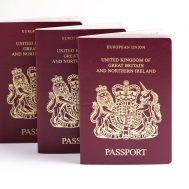
Due to coronavirus disruption, it is currently taking up to six weeks to renew or replace a passport online. It can take even longer if you apply by post or if applying for a first adult passport. Passport offices and the premium and fast track services are currently closed.

However, you may be able to get a passport urgently to travel for compassionate reasons or work, or to prove your identity. For example, if you are applying for a job, mortgage or benefits.

Compassionate reasons to travel include:

  • you or someone you care for needs urgent medical treatment in another country
  • a family member or friend in another country is seriously ill or has died

Valid reasons for urgent travel to another country could apply if, for example, you work:

  • for an airline or haulage company
  • offshore, for example on a rig
  • for government or local government and you’re doing business abroad
  • in healthcare
  • for social services and you need to travel with children
  • for the armed forces or the police


Government legal department numbers open to fraud


The Government Legal Departments (GLD) is warning that its general enquiry number (020 7210 8500) and switchboard number (020 7210 3000) are being used by fraudsters to try and extract money from members of the public.

In most of the reported cases, the fraudsters claim they are calling from the GLD or HMRC, with the GLD enquiry line number showing in the caller ID. The callers are usually very aggressive on the phone, threatening members of the public that if they do not pay a certain amount of money, the police will arrest them. The calls are NOT being made by GLD or HMRC and are calls being made from numbers that have been effectively hijacked by fraudsters.

The GLD has confirmed that they never make outbound calls from their enquiry line or switchboard number. The GLD will also never ask you for your bank details or to pay money over the phone. If you receive a call of the type described above, please hang up and report full details of the scam by email to: phishing@hmrc.gov.uk. When making your report, please ask for it to be associated with report reference NFRC200803859141. 

If you’ve been a victim of a scam and suffered financial loss, you should call Action Fraud on 0300 123 2040 immediately. Recipients of suspicious emails claiming to be from HMRC should also forward details to phishing@hmrc.gov.uk and suspicious texts to 60599.