Government u-turn on lockdown changes


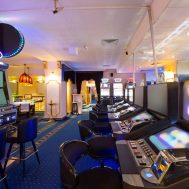
Lockdown changes – in England – that were due to come into effect on 1 August 2020, have been delayed until at least 15 August. The last-minute announcement by the Prime Minister, Boris Johnson, followed worries of a rise in COVID cases and means that casinos, bowling alleys and ice skating rinks will remain closed in England for the time being.

The government has also paused pilot schemes to trial opening indoor events such as the gradual reopening of indoor theatres and other live performance venues. The planned pilot trials for large scale sporting events have also been put on hold. The government has said they will resume pilot events if and when it is safe to do so.

The announcement also affects the planned reopening of close contact beauty services which require staff and customers to be face-to-face and in very close proximity. Examples include, facial hair removal services, facial treatments, make-up applications and eyebrow treatments. Wedding ceremonies can still go ahead with up to 30 people, but small wedding receptions are not allowed.

It was also announced that face coverings will be required in more indoor settings such as places of worship, social clubs, community centres, cinemas and museums. This is mandatory in England from 8 August 2020.

The government further announced new restrictions in parts of northern England after a localised spike in virus cases.
The UK government is only responsible for lifting lockdown restrictions in England. This is because health is a devolved matter, accordingly, Scotland, Wales and Northern Ireland are responsible for their own public health policies.


£50 bike repair voucher scheme launched


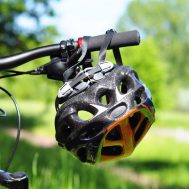
The government has launched a new scheme – open to anyone in England – with a bike in need of repair. The Fix your Bike Voucher Scheme is a new initiative that has been championed by the Prime Minister, Boris Johnson, to help fix old bikes by offering a £50 bike repair voucher towards the total cost of repairs needed. The scheme hopes to provide an alternative to using public transport, reduce short car journeys and keep more people fitter whilst using a socially distanced form of transport.

The scheme opened just before midnight on 28 July when the first batch of 50,000 vouchers were due to be released. It is expected that up to 500,000 bike vouchers will be available in total. However, there have been issues with the website and vouchers are being rolled out in batches in order to reflect the capacity of the bike repairers signed up to the scheme. If you are interested in requesting a voucher, the sign up page is on the Energy Saving Trust website at https://fixyourbikevoucherscheme.est.org.uk/

Vouchers can only be used with authorised bike repairers or mechanics that are registered for the scheme in England. Up to two vouchers can be claimed per household, but only one used per bike. You will need to have the voucher before going to get your bike repaired.

The government is also moving ahead with plans to encourage alternative ways of travelling such as cycling and walking. This includes the provision of pop-up bike lanes with protected space for cycling, wider pavements, safer junctions, and cycle and bus-only corridors in England as part of a £250 million emergency active travel fund.


Local authorities to receive £500m additional support


The government has confirmed allocations for individual councils in England from the £500 million of additional support for Coronavirus-related spending pressures. This further injection sees a total of £4.3 billion in direct funding to councils to help with issues caused by the Coronavirus pandemic. The money is being distributed to councils based on population and levels of deprivation, and how the costs of delivery of services varies across the country.

The government has also announced a co-payment scheme that will compensate councils for irrecoverable income losses from sales, fees and charges such as from parking and from heritage services. They will be expected to absorb the initial 5% of losses compared to planned income from these sources. Thereafter, there will be a cost splitting arrangement where 75p in every pound of relevant losses will be compensated for by the government. The scheme does not cover lost commercial rent income.

Local Government Secretary Rt Hon Robert Jenrick MP said:

'Councils are playing a vital role in our national fight against Coronavirus, providing a lifeline for so many and supporting communities at a time when they need it most. That’s why we are giving them an extra £500 million – taking our total additional funding provided to £4.3 billion – and today I am setting out how this will be allocated to councils fairly based on the pressures they have told us they are facing. This comes on top of the co-payment scheme announced last week that will compensate councils for irrecoverable income losses from sales, fees and charges.'


Draft legislation published for Finance Bill 2020-21


The government has published the draft legislation for Finance Bill 2020-21, along with accompanying explanatory notes, tax information and impact notes. The consultation on draft clauses is intended to make sure that the legislation works as intended. The consultation will close on 15 September 2020.

The Finance Bill will contain the legislation for some of the tax measures that have been previously announced by the government many of which have since been the subject of further consultation.

The publication of the draft Finance Bill is in line with the current approach to tax and where the government committed to publishing most tax legislation in draft for technical consultation before the legislation is laid before Parliament.

This Finance Bill will see the introduction of a number of measures from April 2021 including:

  • Changes to the van benefit charge regarding zero emission vans.
  • Changes to collective money purchase pension schemes.
  • Changes to the treatment of termination payments and post-employment notice pay for Income Tax.
  • Changes to working time requirements for Enterprise Management Incentives.
  • New rates of Stamp Duty Land Tax for non-UK residents from 1 April 2021.


Sports facilities to open this month


In a surprising move, the government has given permission for sports facilities in England to begin reopening. Initial projections had suggested that gyms would be closed until at least the Autumn when it was hoped that the virus is more completely under control.

Outdoor pools were given permission to reopen from 11 July although many pools remained closed as they were only given a few days' notice to comply with the new rules. Many venues have said they need time to prepare the pool and properly implement social distancing measures. There are also outdoor pools that will remain closed for the summer season as it will not be financially viable for them to open this late in the season.

From 25 July, indoor gyms, swimming pools and sports facilities are allowed to reopen. Outdoor gyms were permitted to reopen from 4 July.

The new guidance includes many suggested measures for these facilities to operate safely including:

  • Limiting the number of people using facilities at one time;
  • Reducing class sizes;
  • Spacing out equipment or taking some out of service to maintain social distancing;
  • Enhanced cleaning and providing hand sanitizer throughout venues;
  • Encouraging participants to shower and change at home wherever possible, although changing rooms can be made available.

The UK government is only responsible for lifting lockdown restrictions in England. This is because health is a devolved matter, which means that the Scotland, Wales and Northern Ireland are responsible for their own policies in relation to public health matters. Gyms in Northern Ireland have already reopened but no date has yet been published for Scotland or Wales.


Reminder of businesses opening since 4 July 2020


A reminder that since 4 July 2020, many business sectors have been given permission to reopen in England. The businesses are expected to follow COVID-19 secure guidelines.

The categories of businesses that have been allowed to reopen include:

  • hotels, hostels, bed and breakfast accommodation, holiday apartments or homes, cottages or bungalows, campsites, caravan parks or boarding houses
  • places of worship
  • libraries
  • community centres
  • restaurants, cafes, workplace canteens, bars, pubs that are self-contained and can be accessed from the outside
  • hair salons and barbers, including mobile businesses
  • cinemas
  • theatres and concert halls
  • funfairs, theme parks, adventure parks and activities
  • outdoor gyms and playgrounds
  • museums and galleries
  • bingo halls
  • outdoor skating rinks
  • amusement arcades and other entertainment centres
  • model villages
  • social clubs
  • indoor attractions at aquariums, zoos, safari parks, farms, wildlife centres and any place where animals are exhibited to the public as an attraction
  • indoor and outdoor areas of visitor attractions including, gardens, heritage sites, film studios and landmarks

The UK government is only responsible for lifting lockdown restrictions in England. This is because health is a devolved matter, which means that Scotland, Wales and Northern Ireland are responsible for their own policies in relation to public health matters. The other governments have generally taken a more stringent view in regard to reopening businesses with different roadmaps for easing the various restrictions. 


Reminder of businesses not opening 4 July 2020


There are business sectors that have not yet been given permission to reopen in England. There has been no indication given as to when these businesses will be able to reopen.

Government guidance lists the following businesses that currently need to remain closed, as government assessment suggest that they cannot yet be made sufficiently COVID-19 Secure:

  • nightclubs
  • casinos
  • bowling alleys and indoor skating rinks
  • indoor play areas including soft-play
  • spas
  • nail bars, beauty salons and tanning salons
  • massage, tattoo and piercing parlours
  • indoor fitness and dance studios, and indoor gyms and sports venues/facilities
  • swimming pools and water parks
  • exhibition or conference centres – where they are to be used for exhibitions or conferences, other than for those who work for that venue.

It looks unlikely that these types of businesses will be able to reopen until the virus is under control. These type of 'close proximity' businesses cannot usually operate whilst following strict social distancing requirements.

The UK government is only responsible for lifting lockdown restrictions in England. This is because health is a devolved matter, which means that Scotland, Wales and Northern Ireland are responsible for their own policies in relation to public health matters.


Finance Bill 2020 progress


The government’s Finance Bill 2020 (formally known as Finance Bill 2019-21) has now completed its passage through the House of Commons and the 1st reading at the House of Lords took place on 2 July 2020. This stage is a formality that signals the start of the Bill's journey through the Lords. The date for the 2nd reading of the Bill, where a general debate on all aspects of the Bill will take place has not yet been announced.

The Bill is known as a 'Money Bill' which means that the further stages of the Bill namely, the committee stage, report stage and third reading at the House of Lords are usually formalities. Once these steps have been completed, the Bill will receive Royal Assent and become an Act of Parliament known as Finance Act 2020.

The Bill contains the legislation for some of the tax measures that were announced when the Chancellor of the Exchequer presented his Budget to Parliament on Wednesday 11 March 2020. This includes the reduction in Entrepreneurs’ relief lifetime limit, changes to main residence relief, increased R&D credits and the introduction of the Digital Services Tax. In addition, a number of important amendments and new clauses to the Bill were introduced at the report stage concerning the Coronavirus pandemic.


Financial help for debt advisers


The government has announced that an extra £37.8 million will be made available to support debt advice providers during 2020-21. The distribution of the money will be overseen by the Money and Pensions Service (MaPS). MaPS will set out the process for allocating funds in the coming weeks to charities for debt advice and to other money guidance services.

The funding consists of £20.6 million from the government and £14.2 million raised through a one-off increase to the Financial Services Levy. In addition, MaPS will also be contributing a further £3 million from their existing budget.

Caroline Siarkiewicz, Chief Executive of MaPS, said:

'The impact the Coronavirus pandemic will have on people’s financial wellbeing is significant and will continue for some time. We know there will be increased demand for free, expert debt advice services over the coming months and this extra funding will help to ensure that more people can access help more quickly. Our MaPS services are here to provide support for people when they need it and to help them navigate the tricky months ahead'.

The money will help providers to deliver advice to 1 million additional people in England over the next 12-28 months, especially those who may be experiencing financial problems due to the Coronavirus disruption. The government also confirmed that the additional funding will be matched for the devolved administrations, resulting in an extra combined £5.9 million for Scotland, Wales and Northern Ireland.


Vehicle MOT dates


The government has announced that mandatory MOT tests for car, motorcycle and van owners in England, Scotland and Wales are to be reintroduced from 1 August 2020. This means that all drivers whose vehicle is due for an MOT test from 1 August will be required to get a test certificate to continue driving their vehicle. The government is reintroducing this requirement to keep roads safe. Testing capacity has already reached 70% of normal levels and is steadily increasing.

Vehicle owners with an MOT expiry date between 30 March 2020 and 31 July 2020 will continue to receive a 6 month extension. This includes vehicles that are due their first MOT test. The MOT expiry date will be automatically extended about 7 days before it is due to expire. For example, if your vehicle's MOT was due to expire on 3 May 2020, this will automatically be extended to 3 November 2020. It is important to remember that vehicles must be kept roadworthy even if the MOT date has been extended.

If you are not using your car, you can register your vehicle as off the road by obtaining a statutory off road notification (SORN). This will result in any remaining full months of vehicle tax refunded. You could also take advice to see if your car insurance could be cancelled.