
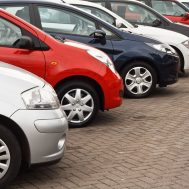
VAT Margin Scheme on sales of vehicles


A Margin Scheme is an optional method of accounting which allows certain businesses to calculate VAT based on the 'value' they add to the goods they sell, rather than on the full selling price.  Without the use of the Margin Scheme, businesses would have to account for VAT on the full selling price of goods within the Margin Scheme.

There is a special Margin Scheme for the sale of second-hand cars and other vehicles. This is covered by VAT Notice 718/1 The Margin Scheme on second-hand cars and other vehicles. If you sell second-hand vehicles on which you were not charged VAT, using the Margin Scheme will save you money. There are certain conditions that must be met in order to use the scheme. This includes ensuring that the vehicles are eligible to use the scheme and that they were acquired under eligible circumstances.

The notice explains when to use the second-hand Margin Scheme to account for VAT on sales of second-hand vehicles. It also explains which vehicles can be sold under the scheme, how the scheme works, how to calculate the margin, and what records must be kept by a business using the scheme.




Less is more – MTD regulations relaxed


Starting from April 2019, most VAT-registered businesses that have a taxable turnover over £85,000 are required to keep their VAT records digitally and use Making Tax Digital (MTD) compatible software to submit their VAT return information to HMRC.

There are exceptions for certain businesses that have until the first VAT Return period starting on or after 1 October 2019 to start using MTD for VAT. This includes businesses that are part of a VAT group or VAT division, use the annual accounting scheme or that make payments on account. If your business has a turnover under the VAT registration threshold, you are not currently mandated to use the MTD for VAT service but can opt to do so if you wish.

HMRC also has also announced a number of other relaxations that will help businesses adapt to MTD. For example, HMRC has agreed to give businesses until 31 March 2020 to make sure there are digital links between software products. This means that during the first year of MTD for VAT, businesses who use more than one software programme to keep their VAT records and prepare and file returns will not be required to have digital links between those software programmes. From March 2020, bridging or MTD-compatible software will be required so that this information can be digitally sent to HMRC with no manual intervention.

It has also been confirmed that where a supplier issues a statement for a period, you may record the totals from the supplier statement (rather than the individual invoices) provided all supplies on the statement are to be included on the same return and the total VAT charged at each rate is shown. Although, HMRC is keen to point out that it is best practice to record the individual supplies digitally as this means less risk of invoices either being missed completely or being entered twice (as an invoice and as part of a statement).


Last call, are you ready for revised digital filing of your VAT returns?


Most VAT registered businesses with a turnover above the VAT threshold need to be ready to keep digital records for VAT purposes, and to file their VAT returns, as required by the new Making Tax Digital (MTD) rules.

What does this mean?

For VAT return periods starting on or after 1 April 2019, businesses with a turnover above the VAT threshold (currently £85,000) have to:

  • keep their records digitally (for VAT purposes only), and
  • provide their VAT return information to HMRC through MTD functional compatible software.

Businesses need to sign up for MTD for VAT in order to submit VAT returns digitally. HMRC has confirmed that businesses that pay VAT by Direct Debit cannot sign up in the 7 working days leading up to, or the 5 working days after sending a VAT Return.

HMRC has also confirmed that during the first year of the changes that they will take a light-touch approach to digital record keeping and filing penalties where businesses are doing their best to comply with the law. HMRC is clear that this does not mean a blanket 'no penalties promise' and businesses need to be aware to do all they possibly can to meet the MTD requirements.

But I am exempt from online filing

Any businesses that are currently exempt from online filing of VAT will remain so under MTD. There are also provisions for those who cannot adapt to the new service due to age, disability, location or religion to apply for an exemption.

There is also a deferral group for certain entities that have until the first VAT Return period starting on or after 1 October 2019 to start using MTD for VAT. This includes businesses that are part of a VAT group or VAT division, use the annual accounting scheme or that make payments on account. If your business has a turnover under the VAT registration threshold, you are not currently mandated to use the MTD for VAT service but can opt to do so if you wish.

Need help?

If you are uncertain how to proceed, either to register for MTD filing, find appropriate software or deal with any other aspect of MTD for VAT, please call asap as we are running out of time to keep you compliant.


Beware Limited Cost Test if you use the VAT Flat Rate Scheme


The VAT Flat Rate Scheme (FRS) has been designed to simplify the way a business accounts for VAT and in so doing, reduce the administration costs of complying with the VAT legislation. The scheme is open to businesses that expect their annual taxable turnover in the next 12 months to be no more than £150,000.

In April 2017, HMRC introduced a limited cost test that can increase the VAT flat rate percentage used by VAT registered businesses that use the Flat Rate scheme. It appears that HMRC considered the benefits obtained by certain businesses to be excessive. Businesses that meet the definition of a 'limited cost trader' are required to use a fixed rate of 16.5%. The highest 'regular' rate is 14.5%.

Why should I be concerned about this change?

A limited cost trader is defined as one whose VAT inclusive expenditure on goods is either:

  • less than 2% of their VAT inclusive turnover in a prescribed accounting period;
  • greater than 2% of their VAT inclusive turnover but less than £1,000 per annum if the prescribed accounting period is one year (if it is not one year, the figure is the relevant proportion of £1,000).

For some businesses – for example, those who purchase no goods, or who make significant purchases of goods – the outcome of the test will be self-evident. Other businesses need to complete a simple test, using information they already hold, to work out whether they need to use the higher 16.5% rate. Businesses currently using the scheme are expected to ensure that, for each accounting period, they use the appropriate flat rate percentage. Any businesses adversely affected by the test should consider whether it is more beneficial to leave the FRS and account for VAT using the normal rules.

How do I check this out? 

The number crunching can be complicated and you need to get this right otherwise you may have to repay VAT underpaid to HMRC. Please call if you would like us to check out this for you.


VAT and transfer of business as a going concern


The transfer of a business as a going concern (TOGC) rules concern the VAT liability on the sale of a business. Normally the sale of the assets of a VAT registered or VAT registerable business will be subject to VAT at the appropriate rate.

However, where the sale of a business includes assets and meets certain conditions, the sale will be categorised as a TOGC. A TOGC is defined as 'neither a supply of goods nor a supply of services' and is therefore outside the scope of VAT and no VAT is chargeable on the sale.

HMRC lists the following conditions necessary for a TOGC as follows:

  • The assets must be sold as part of a 'business' as a 'going concern'. In essence, the business must be operating as such and not just an 'inert aggregation of assets'.
  • The purchaser intends to use the assets to carry on the same kind of business as the seller.
  • Where the seller is a taxable person, the purchaser must be a taxable person already or become one as the result of the transfer.
  • Where only part of a business is sold it must be capable of separate operation.
  • There must not be a series of immediately consecutive transfers.
  • There are further conditions in relation to transactions involving land.

The TOGC rules can be complex and both the vendor and purchaser of a business must ensure that the rules are properly followed. The TOGC rules are also mandatory, which means that it is imperative to establish from the outset whether a sale is or is not a TOGC. For example, if VAT is charged in error, the buyer has no legal right to recover it from HMRC and would have to seek to recover this 'VAT' from the seller.


VAT registration thresholds


HMRC’s VAT Notice 700/1: should I be registered for VAT? has recently been updated. The update reflects the fact that the taxable turnover threshold, that determines whether businesses should be registered for VAT has been frozen at £85,000 from 1 April 2019. In addition, the taxable turnover threshold that determines whether businesses can apply for deregistration remains at £83,000.

It was confirmed as part of the Autumn Budget 2018 measures that the taxable turnover registration and deregistration thresholds will be frozen at the current rates until 31 March 2022.

Businesses are required to register for VAT if they meet either of the following two conditions:

  1. At the end of any month, the value of the taxable supplies made in the past 12 months or less has exceeded £85,000; or
  2. At any time, there are reasonable grounds for believing that the value of taxable supplies to be made in the next 30 days alone will exceed £85,000.

The registration and deregistration threshold for relevant acquisitions from other EU Member States is also £85,000.


Making an EU VAT refund claim


The VAT paid in other EU countries is often recoverable by VAT-registered businesses in the UK, who bought goods or services for business use. The exact rules of what VAT is refundable depends on the other countries' rules for claiming input tax. It is important to note that VAT incurred in foreign countries can never be reclaimed on a domestic UK VAT return.

Claims must be made electronically via the tax authority in which the claimant is established, i.e. a claim from a UK company to any other EU country must be submitted electronically to HMRC. The deadline for the submission of a refund request for expenses incurred in other EU member states during the 2018 calendar year is 30 September 2019. HMRC will electronically forward the claim to the country where the VAT was paid. 

We had urged readers to make a claim before 29 March 2019, the expected Brexit date as the claim process could have been compromised if there was a no-deal Brexit. Given the expected Brexit 'flextension' until the end of October 2019, any businesses that need to make a claim should ensure they do so by the deadline of 30 September 2019. After we leave the EU, it is likely that UK businesses will be able to reclaim VAT from EU countries, by using the existing process available to non-EU businesses.

VAT registered businesses in the UK can use the scheme to reclaim the VAT paid in other EU countries where all the following apply:

  • They are not VAT-registered in the EU country where they are making a claim and don’t have to be or can’t be registered there.
  • They don’t have a place of business or other residence there.
  • They don’t make any supplies there, unless they are transport services for the international carriage of goods or the person they are supplying pays VAT on the supplies.


The VAT concept of business


The VAT system is policed by HMRC and there can be heavy penalties for breaches of the legislation.

There are four conditions that must be satisfied in order for an activity to be within the scope of UK VAT.

These conditions are that the activity:

  1. is a supply of goods or services
  2. that the supply takes place in the UK
  3. is made by a taxable person
  4. is made in the course or furtherance of any business carried on or to be carried on by that person

The fourth point above is a condition that needs to be considered when deciding whether an activity is within the scope of VAT. This concept of business is one of the less well-known rules. However, it is an important condition that decides if a business must charge VAT on their sales, known as output VAT and on its ability to recover VAT, known as input tax.

The VAT concept of business is taken to be the same as the concept of 'economic activity' set out in European legislation. Therefore, if an activity falls within EU definition of economic activity it must be business in the UK. Both of these definitions are wide and, in some cases, have needed to be interpreted by the courts.


VAT Fuel Scale Charges


The new VAT road fuel scale charges have been published. The changes amend the VAT scale charges for taxing private use of road fuel to reflect changes in fuel prices.


The new fuel scale charges must be used by companies from the start of their next prescribed accounting period beginning on or after 1 May 2019. The fuel scale rates continue to encourage the use of cars with low CO2 emissions. 


The revalorisation of fuel scale charges is no longer part of the Budget process and the tables are published by HMRC annually.


Where the CO2 emission figure is not a multiple of five, the figure is rounded down to the next multiple of five to determine the level of the charge. For a bi-fuel vehicle which has two CO2 emissions figures, the lower of the two figures should be used.


VAT grouping


There are special VAT rules that allow two or more corporate bodies to be treated as a single taxable person for VAT purposes known as a VAT group.

Advantages of group registration

  • The representative member accounts for any tax due on supplies made by the group to third parties outside the group. This is particularly helpful if your accounting is centralised.
  • As the group is treated as a single taxable person, you do not normally account for VAT on goods or services supplied between group members.
  • Only one VAT return is required for the whole group.

Disadvantages of group registration

  • You will need to make sure that the representative member has all the necessary information to submit a VAT return for the group by the due date.
  • All members of the group are jointly and severally liable for the tax due from the representative member.
  • The partial exemption de minimis limits apply to the group as a whole and not the members individually.
  • The limit for voluntary disclosures of errors on past returns also applies to the group as a whole.
  • The cash accounting limits apply to the group as a whole and not to the members individually.
  • The payment on account limits will apply to the group as a whole and not to the members individually.

HMRC has recently updated the applicable VAT Notice 700/2: group and divisional registration. The notice cancels and replaces the previous version published in August 2014 and has been updated to reflect changes coming into effect on 1 April 2019 that clarify which overseas services can be classified as bought-in services to ensure that such services are subject to UK VAT.